If your cabinet boxes are sturdy, your kitchen layout works, and you mainly want a new look, cabinet refacing may give you the update you want without replacing everything. Full cabinet replacement makes more sense when cabinets are damaged, storage is inadequate, or you want to change your kitchen layout significantly. The right choice depends on your cabinets’ condition, your goals, your budget, and the project’s scope.
Your kitchen feels dated, but does that mean you need to tear out all the cabinets?
Not necessarily.
For many Dallas homeowners, the real decision is not whether to update the kitchen. It is deciding how much of the kitchen actually needs to change.
If you like your existing layout and the cabinet boxes are still in good condition, refacing can dramatically change their appearance while keeping much of the existing cabinetry in place. If you’re dealing with an awkward layout, damaged cabinets, or a lack of useful storage, replacement may be worth the larger project.
Before planning your cabinet refacing in Dallas, here’s how to decide which approach makes sense for your kitchen.
Quick Facts
What Is the Difference Between Cabinet Refacing, Refinishing, and Replacement?
Refacing changes the visible surfaces while keeping the cabinet boxes, refinishing updates the finish on existing materials, and replacement gives you entirely new cabinetry.
These terms are sometimes used interchangeably, but they describe different levels of kitchen updates.
Cabinet Refacing
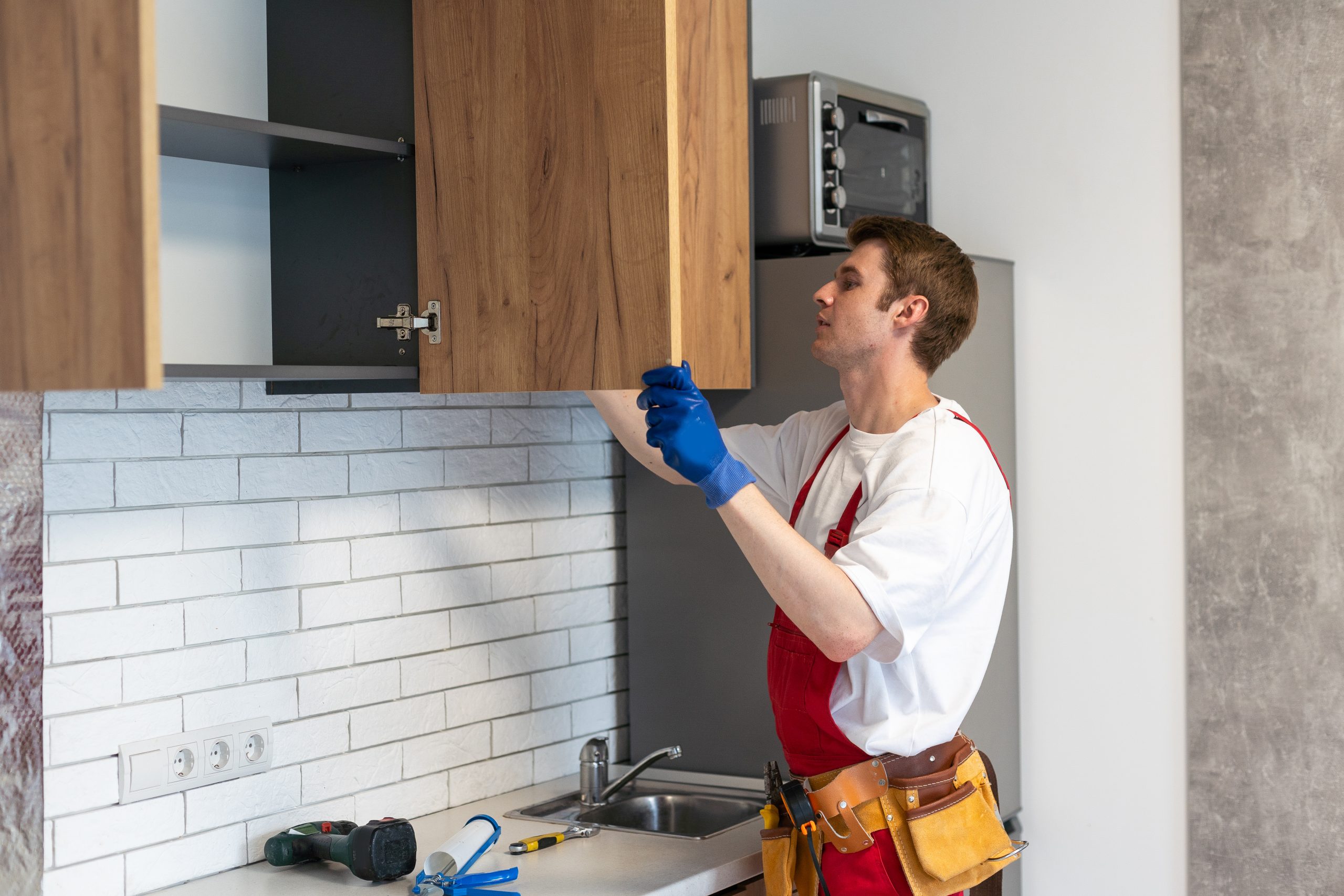
With cabinet refacing, the existing cabinet boxes remain in place. The visible exterior surfaces are updated, and new doors and drawer fronts are typically installed. Hardware may also be replaced as part of the project.
This can create a noticeably different kitchen without removing cabinetry that is still structurally useful.
Cabinet Refinishing
Cabinet refinishing changes the appearance of the cabinetry you already have. Depending on the material and desired result, we may prepare existing surfaces and apply a new paint, stain, or finish.
This can be a good option when you like the cabinet style and simply want to change the color or refresh worn finishes.
Full Cabinet Replacement
Replacement removes the existing cabinets and starts over with new cabinetry.
It is the most flexible option because you are no longer tied to the existing cabinet boxes or layout. Cabinets can potentially be resized, moved, added, or configured differently as part of a broader kitchen remodeling project.
When Is Cabinet Refacing Worth It?
Cabinet refacing is worth considering when your cabinet boxes are structurally sound, you like your kitchen layout, and your biggest concern is the appearance of the cabinets.
Think of refacing as working with a kitchen that already has good bones.
You may be a good candidate if:
- Your cabinet boxes feel solid and secure.
- You are satisfied with the current kitchen layout.
- You have enough storage for your needs.
- The cabinets function properly.
- You dislike the door style, finish, or overall appearance.
- You want a noticeable visual update without completely rebuilding the kitchen.
Refacing is particularly useful when replacing perfectly functional cabinet boxes would add work without solving an actual problem.
If your cabinets looked completely different tomorrow but stayed in the same locations, would you be happy with your kitchen? If the answer is yes, refacing may be worth exploring. If the answer is no because the layout, storage, or functionality bothers you, replacement may be the better conversation.
When Should You Replace Kitchen Cabinets Instead?
Full replacement makes more sense when existing cabinets are significantly damaged or when you want to change the kitchen’s layout, storage, or functionality.
Refacing improves appearance, but it does not solve every cabinet problem.
Consider replacement when:
- Cabinet boxes are badly damaged or deteriorated.
- Water damage has weakened cabinet materials.
- Cabinets are pulling away from walls or no longer feel secure.
- You need substantially more or different storage.
- The current layout creates awkward or wasted space.
- You want to relocate major kitchen features.
- You want a completely different cabinet configuration.
Refacing damaged cabinets can amount to putting a new exterior on a problem that still exists underneath. In those cases, replacement addresses the underlying issue rather than hiding it.
Inspect swollen panels, soft materials, persistent staining, separation, or deterioration around sinks and plumbing before starting cosmetic cabinet work. If moisture is still getting into the cabinetry, fix the source first.
Is It Cheaper to Reface or Replace Kitchen Cabinets?
Refacing is generally less expensive than comparable full cabinet replacement when the existing cabinet boxes can remain, but there is no universal percentage or price difference.
Your actual project cost depends on several factors:
- Number and size of cabinets
- Door and drawer style
- Materials and finishes
- Hardware selections
- Condition of the existing cabinet boxes
- Repairs needed before work begins
- Custom features
- Changes to countertops, backsplash, plumbing, or appliances
A small full replacement using straightforward materials could potentially cost less than an extensive custom refacing project. That is why comparing the actual scope of both options is more useful than relying on a generic percentage.
For homeowners considering several upgrades at once, All In 1 Handyman provides cabinetry and home installation services alongside broader remodeling work.
Which Option Takes Less Time?
Refacing generally involves less demolition and disruption because the existing cabinet boxes stay in place, while replacement can involve removal, installation, and additional finish work.
That does not mean every refacing project has the same timeline. The number of cabinets, materials selected, repairs, customization, and component availability can all affect scheduling.
Replacement can also trigger related work. Changing cabinet dimensions or locations may affect:
- Countertops
- Backsplashes
- Flooring
- Drywall
- Electrical components
- Plumbing
- Appliance placement
If minimizing disruption is a priority and you are already happy with the layout, that can make refacing particularly attractive.
Can Refacing Change Your Kitchen Layout?
No. Traditional cabinet refacing keeps the existing cabinet boxes in place, so it is primarily an aesthetic update rather than a major layout change.
This is one of the most important limitations to understand before choosing it.
New doors, drawer fronts, finishes, and hardware can make the cabinetry look dramatically different. They cannot move a cabinet that blocks traffic, create a pantry where one does not exist, or completely reorganize the work area.
If you regularly think:
- “I wish this cabinet were somewhere else.”
- “We don’t have enough storage.”
- “This corner is wasted space.”
- “I want a completely different kitchen layout.”
Then replacement or a larger renovation may be more appropriate.
How Do Cabinet Refacing and Replacement Compare?
Refacing usually wins for preserving a functional layout with less disruption, while replacement wins for customization and major functional changes.
| Consideration | Cabinet Refacing | Full Replacement |
|---|---|---|
| Existing boxes | Kept in place | Removed and replaced |
| Layout changes | Very limited | Much greater flexibility |
| Visual change | Can be significant | Complete redesign possible |
| Disruption | Generally less | Generally more |
| Best candidate | Sound cabinets and a good existing layout | Damaged cabinets or a kitchen needing functional changes |
How Do You Know If Your Cabinets Are Good Candidates for Refacing?
Good refacing candidates have solid cabinet boxes, functional doors and drawers, secure mounting, and a layout that already works for the homeowner.
Before choosing finishes or hardware, start with the condition of what you already have.
Look inside and around the cabinetry for:
- Swelling or moisture damage
- Loose or separating materials
- Cracks or significant deterioration
- Cabinets pulling away from walls
- Sagging shelves
- Damaged drawer components
- Areas that have already required repeated repairs
Minor repair needs do not necessarily rule out a kitchen cabinet update. The question is whether the existing cabinetry provides a sound foundation worth keeping.
Do not choose between refacing and replacement based on cabinet color alone. First evaluate the boxes, storage, layout, and functionality. Once you know what is worth keeping, you can make better decisions about where to spend your remodeling budget.
What Should Dallas Homeowners Consider Before Updating Kitchen Cabinets?
Start with how you actually use the kitchen, then decide whether your project needs a cosmetic refresh, targeted repairs, or a larger remodel.
A beautiful kitchen can still be frustrating if storage is difficult to reach or the layout does not fit your routine.
Before choosing a scope, consider what bothers you most about the current kitchen.
If your list is mostly:
- Outdated cabinet color
- Old-fashioned door styles
- Worn finishes
- Dated hardware
Then refacing or refinishing may deserve serious consideration.
If your list includes:
- Poor storage
- Damaged cabinetry
- Awkward appliance locations
- Limited workspace
- A layout that no longer fits your household
Then a larger remodeling plan may deliver more value for your goals.
All In 1 Handyman provides remodeling and repair services throughout Dallas and surrounding communities, including kitchen improvements, cabinet repairs, installation work, countertops, backsplash work, appliance hookups, and related upgrades.
Cabinet Refacing vs. Replacement FAQs
Is cabinet refacing worth it?
Is it cheaper to reface or replace kitchen cabinets?
What is the difference between cabinet refacing and refinishing?
Can damaged cabinets be refaced?
Can I change my kitchen layout with cabinet refacing?
How do I decide whether to reface or replace my cabinets?
Refresh What Works or Replace What Doesn’t
You do not need to replace an entire kitchen just because the cabinets look dated. At the same time, a new finish cannot fix a layout or cabinet structure that no longer works.
That is why the best place to start is not with a door style or paint color. Start with the cabinets you already have.
If the boxes are solid, storage works, and you like the layout, refacing can preserve what is working while giving the kitchen a fresh look. If your cabinets are damaged or your kitchen needs a functional redesign, replacement gives you more freedom to build around how you actually use the space.
Not sure which direction makes sense? All In 1 Handyman can evaluate your existing kitchen, discuss the improvements you want to make, and help you determine the right project scope.
Schedule a Kitchen Consultation