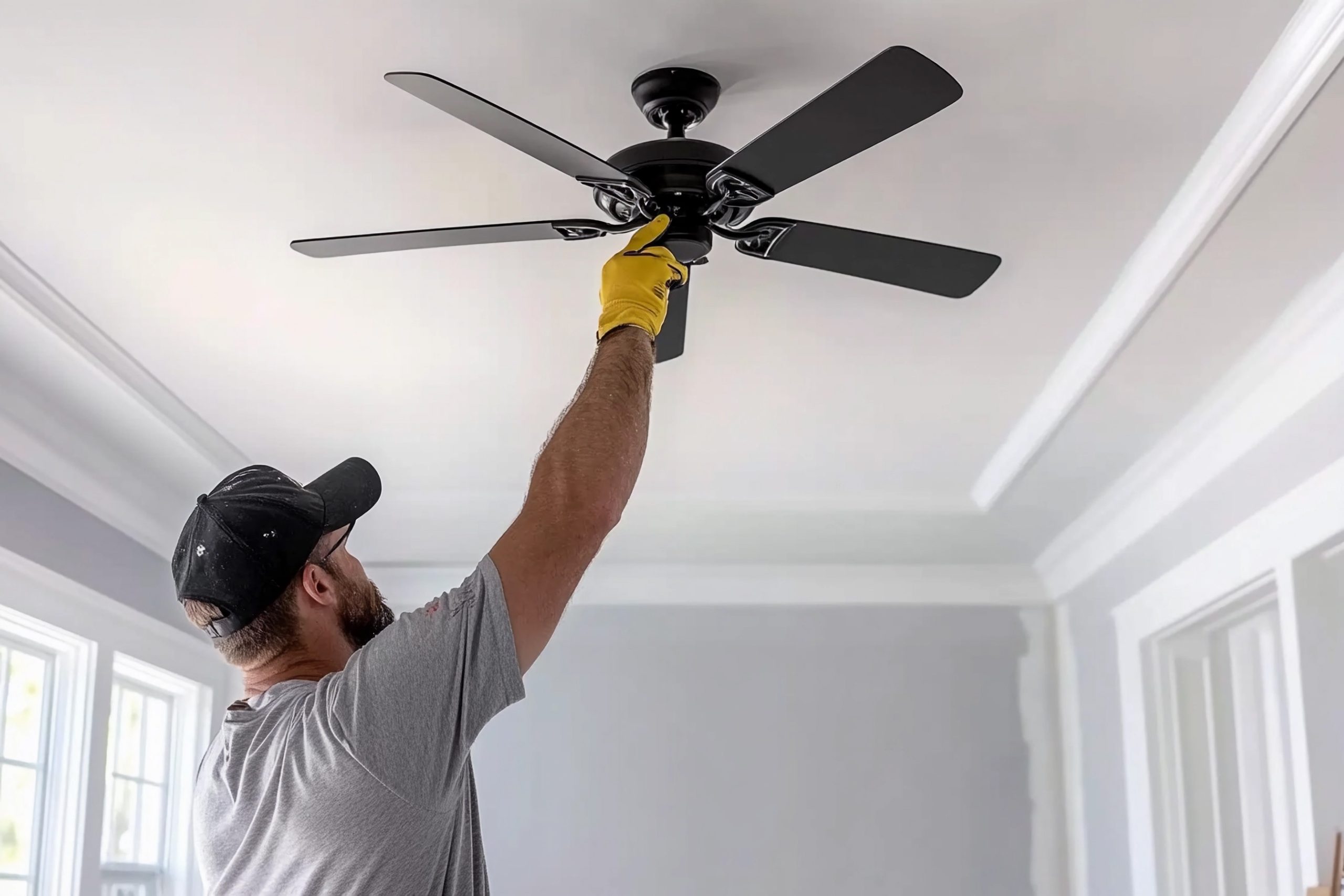
Replacing an existing ceiling fan may be a reasonable DIY project when the mounting support is appropriate, the existing wiring is straightforward, and you are comfortable working safely with electrical fixtures. If your wiring is uncertain, you need a new installation, have an unsuitable electrical box, have a high or vaulted ceiling, or need more complicated controls, professional help may be the safer choice.
A new ceiling fan can improve airflow, update the look of a room, and make your living space more comfortable. But before you grab a ladder and start removing the old fixture, there is an important question to answer:
Should you install the ceiling fan yourself or call a professional?
The answer depends on more than how handy you are. Ceiling fan installation involves electrical connections, overhead work, and a fixture that must remain securely supported while its blades spin. What looks like a simple fixture swap can become a much bigger project if the existing setup is not designed to support a fan.
This guide breaks down what Dallas homeowners should consider before choosing between DIY and professional ceiling fan installation in Dallas, including mounting support, wiring, ceiling height, common warning signs, and situations where it makes sense to call for help.
Quick Facts
Can You Install a Ceiling Fan Yourself?
A ceiling fan replacement may be suitable for an experienced DIY homeowner when the existing setup is already designed for a fan and no significant electrical or structural changes are required.
Replacing one existing fan with another can be relatively straightforward because the mounting location, electrical wiring, and controls may already be in place.
Before deciding to DIY, however, you need to know what is above the fan.
The existing electrical box and its attachment to the home’s structure must be appropriate for the fixture being installed. A ceiling fan creates movement and vibration that a typical light fixture does not. That makes secure mounting particularly important.
A DIY replacement may be worth considering when:
- You are replacing an existing ceiling fan in the same location.
- The existing mounting setup is appropriate for the new fan.
- The wiring is in good condition, and the configuration is straightforward.
- You understand how to safely shut off and verify power to the circuit.
- The ceiling is easy to access with appropriate equipment.
- The new fan does not require significant electrical modifications.
- You can follow the manufacturer’s installation instructions completely.
If you cannot confidently verify those conditions, the project may no longer be a simple DIY replacement.
Turning off a wall switch alone is not enough protection when working on electrical fixtures. Shut off power at the appropriate breaker and verify it before work begins. Do not rely solely on wire colors or assumptions about how an existing fixture was wired. If the wiring is damaged, confusing, or different from what you expected, stop and have a qualified professional evaluate it.
When Should You Hire a Professional for Ceiling Fan Installation?
Professional installation makes sense when the project involves uncertain wiring, new electrical work, inadequate mounting support, difficult access, or a setup you are not comfortable handling safely.
There is an important difference between replacing an existing ceiling fan and adding one where no fan has been installed before.
A new installation may require changes to the electrical box, additional structural support, new wiring, switches, or other electrical components. Those requirements can quickly take the project beyond a basic fixture replacement.
Consider professional help when:
- The room currently has a light fixture instead of a ceiling fan.
- You cannot confirm that the existing electrical box and support are suitable for a fan.
- The home’s wiring appears old, damaged, modified, or difficult to identify.
- You want separate wall controls for the fan and light.
- You are adding smart controls or another more complicated control setup.
- The ceiling is high, vaulted, or difficult to access safely.
- The fan is particularly large or heavy.
- You need new wiring or other electrical modifications.
- You discover unexpected conditions after removing the existing fixture.
Homeowners who already have several repair or installation projects on their list may also choose to work with professional handyman services rather than turning each fixture replacement into another weekend project.
Replacing a ceiling fan does not automatically mean the existing setup is suitable for the new fixture. Before installation, the mounting support, electrical box, wiring, controls, and manufacturer’s requirements should all be considered. If a room has never had a ceiling fan, expect the project to potentially involve more than simply connecting the new fixture.
Does a Ceiling Fan Need a Fan-Rated Electrical Box?
A ceiling fan needs an electrical box and mounting system that are identified as suitable for supporting a ceiling fan.
This is one of the most important differences between hanging a typical light fixture and installing a fan.
Ceiling fans create movement as the motor and blades operate. The mounting system needs to support both the fixture and the forces created during normal operation.
An existing ceiling box should not be assumed to be suitable simply because a light fixture was previously attached to it.
If you are replacing an existing fan, check the installation requirements for the new model and verify that the existing support is appropriate. If you cannot determine whether the box and mounting system are suitable, have them inspected before hanging the new fan.
Signs that the existing setup deserves a closer look include:
- A box that moves when gently checked before installation
- Visible damage around the mounting area
- Loose or missing hardware
- Previous ceiling repairs around the fixture
- A fixture location that previously held only a light
- Uncertainty about how the box is attached above the ceiling
Sometimes changing the mounting support leaves small gaps, cracks, or an oversized opening around the new canopy. In those cases, professional drywall repair can help restore a clean ceiling finish after the installation work is complete.
What Can Go Wrong With DIY Ceiling Fan Installation?
The most common DIY problems involve inadequate mounting support, electrical mistakes, poor assembly, difficult access, and improper balancing.
A fan may appear to work normally immediately after installation even when something is not quite right. Problems can become more noticeable once the fan has operated for a while.
Using the Wrong Mounting Support
A mounting setup intended for a lighter fixture may not provide appropriate support for a ceiling fan. Movement at the ceiling, a loose mounting bracket, or an unstable box should be addressed before the fan is operated.
Making Assumptions About Existing Wiring
Existing wiring is not always as straightforward as expected, particularly in older homes or spaces that have been modified over time.
Do not assume a conductor’s function based only on its color or how the previous fixture appeared to be connected. Unexpected wiring is a good reason to stop the project and have the circuit evaluated.
Ignoring a Wobbling Fan
A small amount of movement can have several causes, including blade alignment or balance, but significant wobbling deserves attention.
Check the manufacturer’s troubleshooting instructions and make sure the fixture is assembled and mounted correctly. A fan that appears loose at the ceiling should not continue operating until the cause has been identified.
Working Beyond a Comfortable Height
Ceiling height can turn an otherwise manageable installation into a much more difficult job. Vaulted ceilings, stairways, and unusually high rooms require appropriate access equipment and make handling a bulky fixture overhead more challenging.
If reaching the installation point requires you to stretch, lean from a ladder, or work from an unstable position, professional installation is the safer choice.
- Read the fan manufacturer’s instructions from beginning to end.
- Confirm that the mounting location is suitable for the fan.
- Shut off and verify electrical power before beginning work.
- Make sure you can safely reach the ceiling.
- Check that all required mounting hardware is present.
- Stop if you encounter damaged or unfamiliar wiring.
- Do not operate a fan that appears loose or improperly supported.
How Do You Decide Between DIY and Professional Ceiling Fan Installation?
The best choice depends on the condition of the existing setup, the complexity of the installation, your ability to work safely with electrical fixtures, and whether the project requires changes beyond a basic replacement.
A straightforward fan replacement and a brand-new ceiling fan installation are very different projects. Before deciding to DIY, look at the entire job rather than just the fan itself.
Ask yourself:
- Is there already a ceiling fan in this location?
- Can I confirm the existing mounting system is appropriate for the new fan?
- Is the wiring straightforward and in good condition?
- Can I safely reach the installation point?
- Does the new fan require different controls or electrical modifications?
- Am I comfortable stopping if I find something unexpected?
If you answered no or “I’m not sure” to several of those questions, professional installation may be the better route.
All In 1 Dallas offers ceiling fan installation and common residential electrical services throughout the Dallas-Fort Worth area, giving homeowners an option when a fixture project turns out to be more complicated than expected.
What Should You Check Before Installing a Ceiling Fan?
Before installation begins, check the mounting support, electrical setup, ceiling height, fan specifications, controls, and work area.
A few minutes of planning can reveal whether you are dealing with a straightforward replacement or a project that requires additional work.
Check the Existing Fixture
If a ceiling fan is already installed, look for obvious movement, damage, or signs of previous repairs around the canopy. Removing an old fan may also reveal conditions that were not visible from below.
Review the New Fan Requirements
Fans vary in size, weight, mounting style, controls, and installation requirements. Read the manufacturer’s instructions before removing the existing fixture so you know whether the current setup is compatible.
Consider the Ceiling Height
Standard-height ceilings are generally easier to access. Tall or vaulted ceilings can require specialized ladders or other equipment and make lifting and securing a fan considerably more difficult.
Think About the Controls
A basic replacement may use the existing controls, while other fans may include lights, remotes, wall controls, or smart features. If the new setup requires changes to the home’s electrical system, that is a good reason to bring in qualified help.
A ceiling fan may come neatly packaged with instructions and hardware, but that does not mean every ceiling is ready for it. The conditions already inside your home can determine whether installation is simple or requires additional work.
Is Professional Ceiling Fan Installation Worth It?
Professional installation can be worthwhile when it removes uncertainty about mounting, electrical connections, difficult access, or unexpected conditions behind the existing fixture.
The biggest advantage is not simply saving yourself an afternoon. It is having someone evaluate the installation as a complete system rather than treating the fan as an isolated product.
Depending on the project, professional installation can help address:
- Removal of the existing fixture
- Mounting and support concerns
- Fixture installation and assembly
- Existing electrical connections
- Fan and light controls
- Final operation and stability
- Minor finishing work around the fixture
For homeowners with a larger list of upgrades, All In 1 Dallas also provides home installation services for ceiling fans, light fixtures, attic ladders, window coverings, and other common household projects.
Local Authority: Ceiling Fan Installation in Dallas-Fort Worth
Ceiling fans are a common upgrade for Dallas-Fort Worth homes, where additional air movement can make bedrooms, living rooms, home offices, and covered living spaces more comfortable.
But every home is different. Some projects are simple replacements. Others reveal an unsuitable mounting setup, older wiring, previous repairs, or ceiling conditions that make installation more involved.
All In 1 Dallas serves homeowners throughout Dallas and surrounding communities with home repair, maintenance, and installation services. Their installation services specifically include ceiling fans, and their current electrical services include ceiling fan installation alongside common fixture, switch, and outlet work.
The goal is simple: get the fan installed securely, operating properly, and looking like it belongs in the room.
Ceiling Fan Installation FAQs
Can I replace a ceiling fan myself?
Can I install a ceiling fan where a light fixture used to be?
How do I know if my electrical box can support a ceiling fan?
Why does my ceiling fan wobble?
Should I hire a professional for a ceiling fan on a vaulted ceiling?
When should I stop a DIY ceiling fan installation?
Make the Right Call Before You Climb the Ladder
DIY ceiling fan installation is not automatically a bad idea, and professional installation is not necessary for every replacement. The right choice depends on what is already in your ceiling and how comfortable you are handling the work safely.
If you have an existing fan, appropriate mounting support, straightforward wiring, and safe access, the project may be manageable. If you find uncertain wiring, mounting problems, a high ceiling, complicated controls, or a completely new installation, calling for help can keep a simple home upgrade from becoming a much bigger headache.
All In 1 Dallas can help with ceiling fan installation and other fixture upgrades throughout the Dallas-Fort Worth area. If you’re unsure what your project requires, start by having the existing setup evaluated.