Peeling paint, soft wood, sagging gutters, water stains, damaged soffit panels, discoloration, and pest activity can all signal fascia or soffit problems. Catching these warning signs early can help Dallas homeowners prevent moisture damage, protect attic ventilation, and avoid more extensive roofline repairs.
That peeling paint along your roofline may look cosmetic, but it could be the first sign that moisture is getting into your fascia.
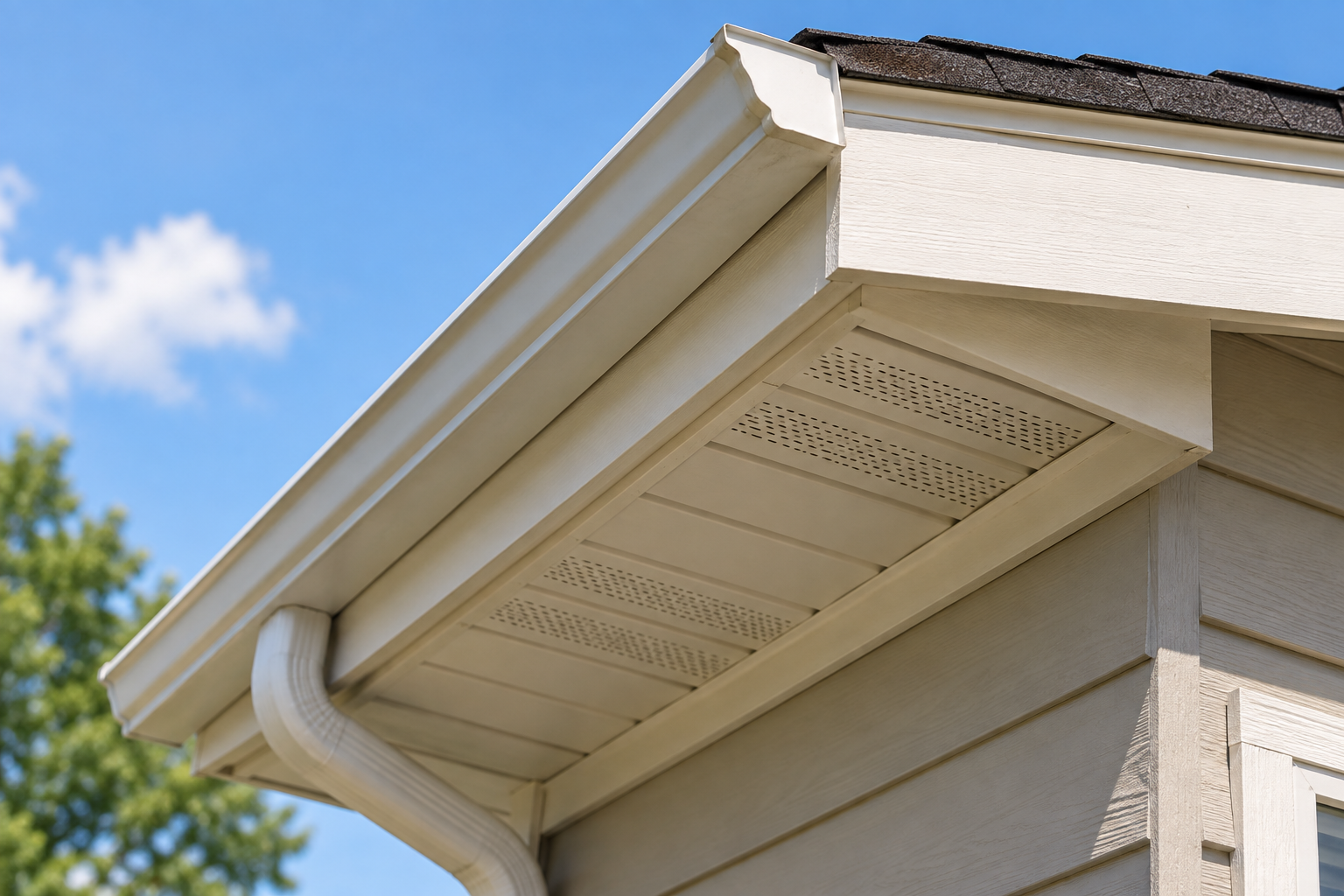
Fascia and soffits are easy to overlook because they sit along the edges and underside of your roof. However, both have important jobs. Fascia helps protect the roof edge and provides support for your gutter system, while soffits enclose the underside of the eaves and can provide ventilation for the attic.
Dallas weather puts these materials through plenty of stress. Intense sun, wind, sudden rain, and severe storms can expose weak points over time. Once moisture gets behind damaged paint or enters through a gap, deterioration can spread beyond what you can see from the ground.
Knowing the warning signs can help you determine when fascia repair in Dallas should move higher on your home maintenance list.
Quick Facts
What Are the Signs You Need Fascia Repair in Dallas?
The most common signs of fascia and soffit trouble include peeling paint, soft wood, sagging gutters, water stains, damaged panels, discoloration, and pest activity.
You do not need to climb onto your roof to notice many of these problems. A visual inspection from the ground can reveal changes in your roofline that deserve a closer professional look.
1. Peeling or Blistering Paint
Peeling paint is one of the easiest warning signs to spot. While exterior paint naturally ages, bubbling or blistering can indicate that moisture has reached the material beneath the finish.
Pay particular attention to paint deterioration near gutters, seams, corners, and other places where water may repeatedly contact the fascia.
2. Soft or Rotting Fascia
Fascia should remain solid enough to support the components attached to it. Wood that appears cracked, swollen, crumbling, or visibly deteriorated may have experienced prolonged moisture exposure.
Once rot develops, simply painting over the area will not restore the damaged material. The source of the moisture should be addressed and compromised sections may need replacement.
3. Sagging or Pulling Gutters
Your gutters can provide an important clue about the condition of the fascia behind them. If sections begin leaning, sagging, or pulling away from the roofline, the fasteners or supporting material may no longer be secure.
The problem could originate with the gutter system itself, the fascia, or a combination of both. Either way, it deserves attention before another heavy Dallas storm adds more weight and water to the system.
One of the easiest times to spot roofline trouble is during or shortly after rainfall. From the ground, look for water dripping behind gutters, unusual staining, overflowing sections, or areas where water appears to be reaching the fascia or soffit instead of flowing through the gutter system.
4. Water Stains Beneath the Eaves
Yellow, brown, or dark staining beneath the roofline can indicate past or ongoing moisture exposure. You may notice staining on soffit panels, fascia, siding, or nearby exterior surfaces.
Do not assume a stain is only cosmetic. The visible mark may be the result of a gutter problem, roof leak, failed seal, or another source of moisture that needs to be identified before repairs are completed.
5. Sagging or Damaged Soffit Panels
Soffit panels should sit securely beneath the eaves. Panels that appear bowed, rippled, cracked, loose, or partially detached may have been affected by moisture, failed fasteners, pests, or storm damage.
Damaged sections can also create openings around the roofline, making timely soffit repair important when deterioration becomes visible.
6. Mold, Dark Spots, or Discoloration
Dark or greenish discoloration around soffits and fascia can be another sign of persistent moisture. Staining does not automatically mean there is a major structural problem, but recurring discoloration should not be ignored.
The underlying cause needs to be identified. Cleaning the visible surface without addressing a leak, drainage problem, or ventilation issue may allow the staining to return.
7. Pest Activity Around the Roofline
Birds, insects, squirrels, and other pests can take advantage of gaps or deteriorated materials around eaves. If you notice repeated activity near one section of fascia or soffit, look for loose panels, damaged screens, or visible openings.
Repairing these weak points helps restore the exterior barrier and reduces opportunities for pests to enter the space above your living areas.
Many fascia and soffit problems occur high above the ground. Avoid climbing onto the roof or using an unstable ladder to inspect questionable areas. A ground-level visual inspection can identify many warning signs. Leave difficult-to-reach inspections and repairs to properly equipped professionals.
How Can You Tell If Your Soffit Is Damaged?
Visible sagging, cracks, stains, loose panels, blocked vents, and pest activity are common indications of soffit damage.
Soffits do more than create a finished appearance beneath your roof. Vented soffits can provide intake airflow that works with other roof vents to help move air through the attic.
Problems arise when those vents become blocked or the surrounding material becomes damaged. Paint, debris, insulation, or damaged screens can restrict airflow, while loose panels can create openings for pests and moisture.
During a ground-level inspection, look for soffit vents that appear clogged or covered, panels that no longer sit flat, and staining that develops after heavy rain.
If the same problem keeps returning after cleaning or minor maintenance, there may be an underlying roofline, drainage, or ventilation issue that needs professional attention.
Why Do Fascia and Soffits Become Damaged?
Fascia and soffit damage commonly develops from repeated moisture exposure, failing gutters, weather, pests, ventilation problems, and normal material aging.
Because these materials sit at the roof edge, they are exposed to some of the harshest conditions around your home’s exterior.
Common contributors include:
- Overflowing or leaking gutters
- Roof or flashing leaks
- Wind-driven rain
- Loose or failed seals
- Storm damage
- Pest activity
- Blocked soffit vents
- Age and weather-related deterioration
Dallas weather can make small weaknesses easier to notice. Intense sun can wear exterior finishes, while heavy rain can expose gaps that allow water into vulnerable materials.
When several smaller exterior repairs are developing at once, professional handyman services can help address maintenance issues before they turn into larger projects.
- Inspect fascia and soffits at least twice a year.
- Take another look after major storms.
- Keep gutters clear and draining properly.
- Watch for new stains or peeling paint.
- Keep soffit vents clear of debris.
- Address loose panels and small gaps promptly.
Can Damaged Fascia Affect Your Gutters?
Yes. Because gutters are commonly attached to fascia boards, weakened or deteriorated fascia can make it harder for the gutter system to remain securely supported.
When fascia is solid and properly maintained, gutter fasteners have a stable mounting surface. When moisture causes the underlying material to soften or deteriorate, those fasteners may begin to loosen.
You might notice gutters that:
- Pull away from the roofline
- Sag between attachment points
- Appear uneven or tilted
- Leak or overflow in specific areas
- Develop gaps between the gutter and fascia
It is also important to remember that this relationship works both ways. A leaking, clogged, or poorly draining gutter can repeatedly expose fascia to water, contributing to deterioration over time.
If your gutters are shifting, simply tightening the fasteners may not solve the underlying problem. The fascia behind them should also be inspected for signs of moisture damage or deterioration.
Can Soffit Damage Affect Attic Ventilation?
Damaged or blocked vented soffits can interfere with airflow into the attic, making proper roofline maintenance important for the home’s overall ventilation system.
Many homes use soffit vents as intake points. Outside air enters through these vents while warmer attic air exits through vents located higher on the roof.
If soffit vents become clogged with debris, painted over, blocked by insulation, or damaged, that airflow can be restricted. The exact effect depends on the home’s ventilation design, but keeping intended ventilation pathways clear is an important part of attic maintenance.
That is one reason soffit damage should not be treated as purely cosmetic. Repairing loose or deteriorated material while keeping ventilation openings clear helps protect the function of the roofline as a whole.
Think of fascia and soffit as two parts of the same roofline system. Fascia protects the roof edge and helps support the gutters, while soffits enclose the eaves and may provide attic ventilation. Damage to either area can be a reason to inspect the surrounding components instead of focusing only on the visible problem.
Should You Repair or Replace Damaged Fascia and Soffit?
Minor surface problems may sometimes be repaired, while rotted, soft, severely warped, or structurally compromised materials generally require replacement.
The right solution depends on what caused the damage and how far it has progressed.
A small gap, loose panel, failed seal, or isolated area of peeling paint may be relatively straightforward to address when the underlying material remains sound. More significant deterioration requires a different approach.
Replacement may be appropriate when you see:
- Visible wood rot
- Soft or crumbling fascia
- Severely warped boards
- Repeated moisture damage
- Large sections of damaged soffit
- Material that can no longer securely support attached components
The source of the damage should always be addressed before new material is installed. Replacing a fascia board without correcting an overflowing gutter or active leak can allow the same problem to return.
For homeowners dealing with deteriorated fascia, professional fascia services can help determine which areas can be repaired and which should be replaced.
How Can You Prevent Fascia and Soffit Damage?
Routine roofline inspections, clean gutters, clear ventilation openings, and prompt repairs are some of the simplest ways to reduce preventable fascia and soffit damage.
You do not need to wait until a board is visibly rotten or a soffit panel falls loose. A quick inspection a few times throughout the year can reveal smaller changes while they are easier to address.
Make these tasks part of your exterior maintenance routine:
- Check the roofline in spring and fall.
- Inspect again after severe storms.
- Keep gutters and downspouts clear.
- Watch for water spilling behind gutters.
- Keep soffit vents unobstructed.
- Look for loose or damaged vent screens.
- Trim branches that repeatedly contact the roofline.
- Repair peeling paint or failed seals before exposed material deteriorates.
Consistency matters. Small problems around the eaves are generally easier to address before repeated moisture exposure damages neighboring materials.
Local Authority: Protecting Rooflines in Dallas
Dallas homes face intense sun, sudden downpours, strong winds, and severe thunderstorms throughout the year. Those conditions make the roofline an important part of routine exterior maintenance.
Homeowners throughout Dallas and surrounding North Texas communities should pay particular attention to fascia and soffits after major storms. New stains, shifted gutters, loose panels, and exposed gaps can indicate that something changed during the weather event.
All In 1 Dallas helps homeowners address fascia, soffit, and related exterior repairs before small areas of deterioration spread into larger projects. When roofline moisture has already affected interior finishes, professional drywall repair services can also help restore affected areas after the exterior source has been corrected.
Frequently Asked Questions About Fascia and Soffit Repair
How often should I inspect my fascia and soffit?
What causes fascia boards to rot?
What are the signs of damaged soffits?
Can damaged fascia cause gutters to sag?
Can fascia and soffit be repaired, or do they need replacement?
Does homeowners insurance cover fascia and soffit repair?
Protect Your Dallas Home from the Roofline Down
Peeling paint or a small stain beneath the eaves may not seem urgent, but these visible changes can be your first opportunity to catch a developing roofline problem.
Pay attention to the seven major warning signs: peeling paint, soft fascia, sagging gutters, water stains, damaged soffit panels, discoloration, and pest activity. When something changes, finding the cause early can help prevent damage from spreading to neighboring materials.
Regular inspections, clear gutters, unobstructed ventilation, and timely repairs can go a long way toward protecting your roofline through Dallas sun and storm season.
If you’ve noticed signs of fascia or soffit damage around your home, All In 1 Dallas can inspect the affected areas and help determine the right next step.